
Who's involved
- Fortune
- A business magazine.
- Its September 28 feature laid out how 401(k)s ended up holding so much of a few giant companies.
- Federal Reserve
- America's central bank. Every few years it also surveys how families save.
- Its 2022 survey found more than half of American families had a retirement account.
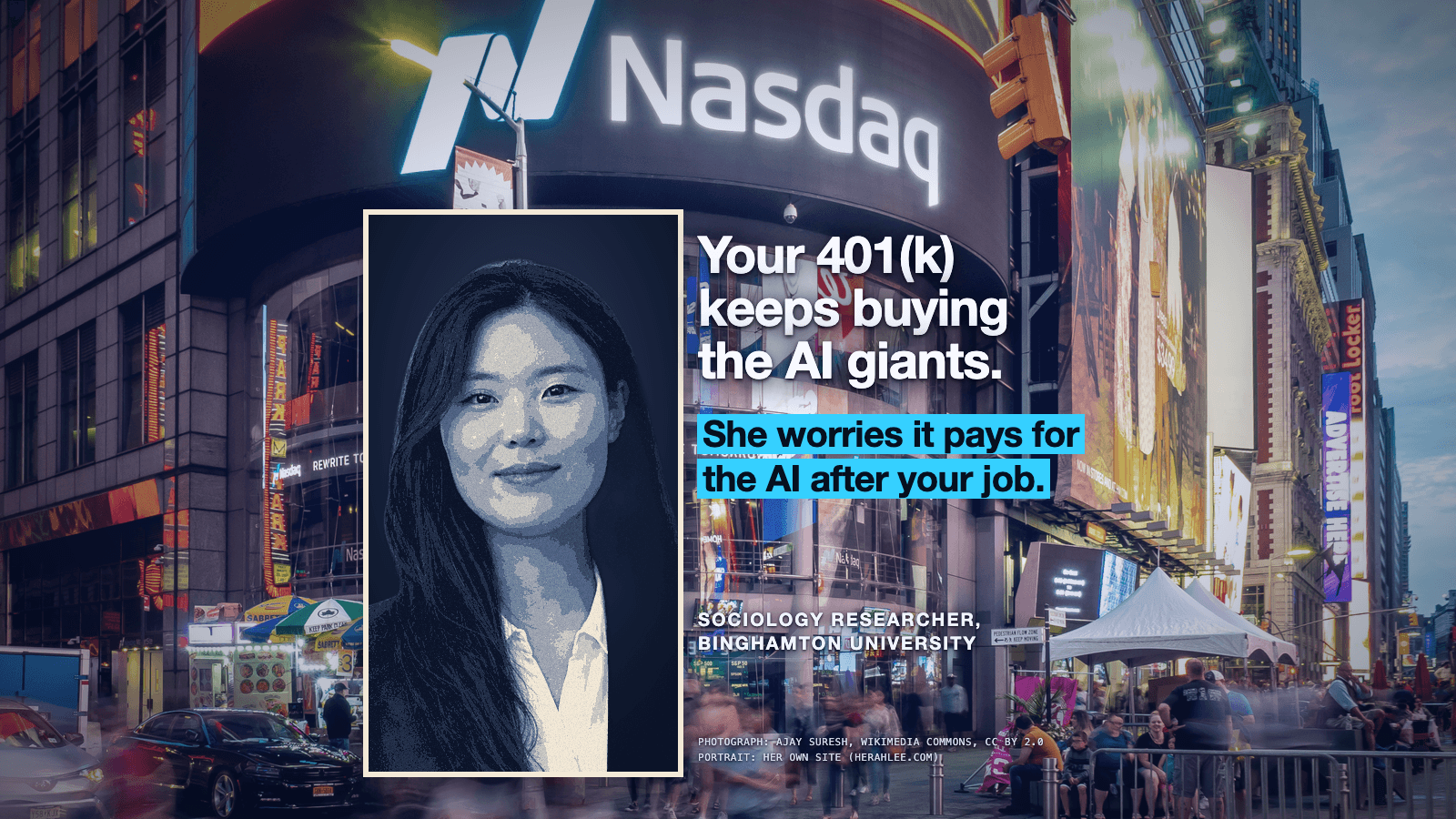
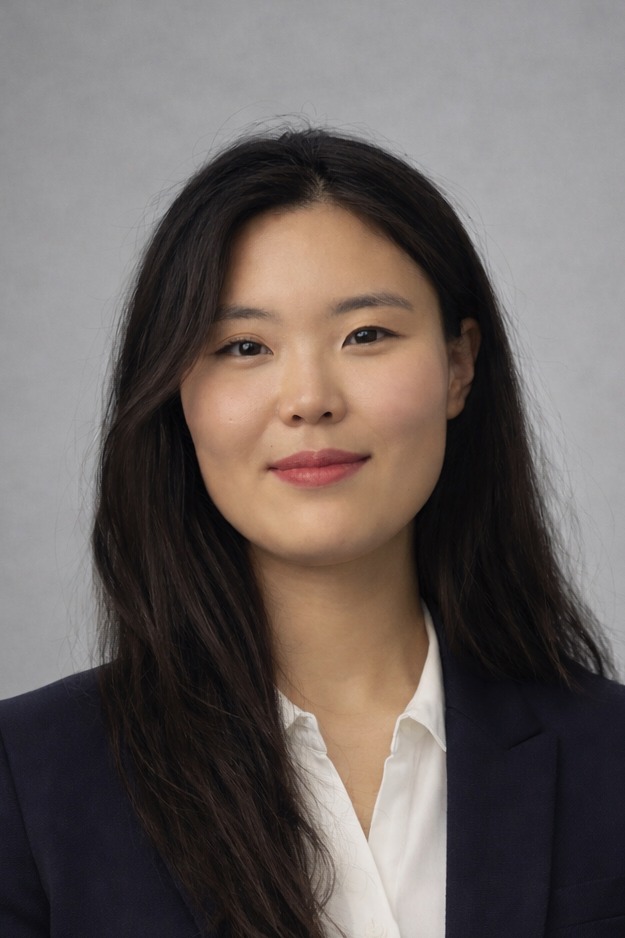
- Hera Hyeonseo Lee
- A sociology researcher at Binghamton University, a public university in New York, who studies how AI is financed.
- She explained how the default fund buys, and where some of the giants' profit really comes from.
- Valentin Haddad
- A finance professor at UCLA Anderson, the business school of the University of California, Los Angeles.
- He compared today's market with the dotcom bubble, and gave the electric-car maker Tesla as an example of how big one stock can get in a 401(k).
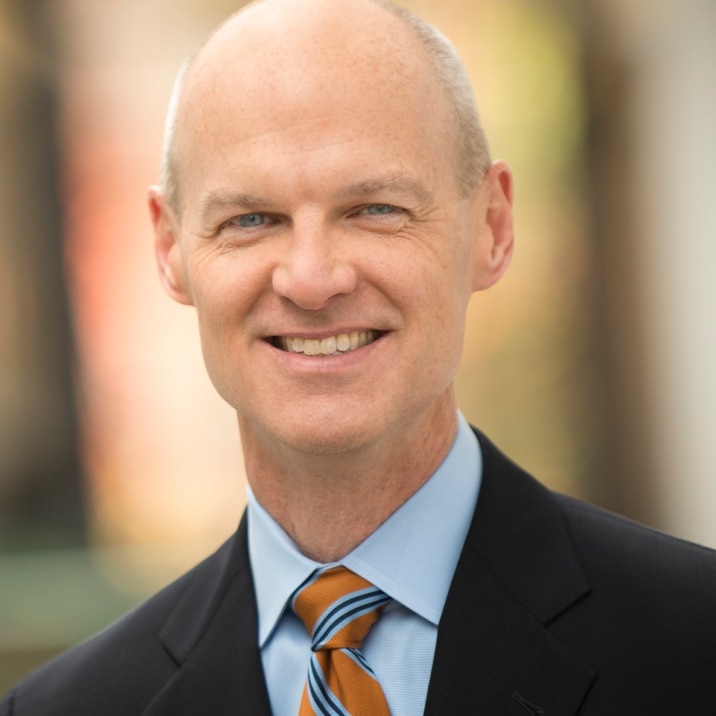
- Jim Rowley
- The global head of indexing strategy at Vanguard, the investment company.
- He explains why index funds buy by size, and lists what a saver can still control.
- Vanguard
- An investment company that runs index funds.
- It is where Jim Rowley works. Its index funds copy market indexes, so they buy by size.
- Amazon
- The online retailer.
- It has invested $13 billion in the AI company Anthropic, and gains on that stake were a big piece of its profit early this year.
- Anthropic
- An AI company. It is still privately owned.
- Its rising value shows up in Amazon's profit, and it is heading toward a stock market listing of its own.
- Nasdaq
- The company that runs the Nasdaq stock exchange and the Nasdaq-100, an index of 100 of the largest companies listed there.
- Its new fast-entry rule lets a giant new stock into that index after 15 trading days.
- SpaceX
- An aerospace and satellite company.
- It went public on June 12 and joined the Nasdaq-100 on July 7, one of the first to use the fast-entry rule.
- S&P Global
- The company that runs the S&P 500, Wall Street's most widely followed stock index.
- It kept its rule that a company must be profitable to join the S&P 500, which keeps SpaceX out for now.
- Yardeni Research
- An independent research firm that writes daily stock market briefings for investors.
- Its president told Fortune the seven tech giants make up "something like 30%" of the S&P 500's total value.







What changed
If you have a 401(k) and never picked your investments, you already own the AI giants. You did not choose them. The default chose them for you. More than 80% of 401(k)s start savers in a target-date index fund, a ready-made mix built around the year you plan to retire, Fortune reported on September 28. Most of those funds buy stocks by size.
Buying by size sounds dull, and for a long time it made good sense. The fund buys every stock in the market, and more of the biggest ones. When a company grows, the fund automatically buys more of it, no matter how expensive it gets. The industry calls this market cap weighting. "Market cap weighting isn't a choice, it's not a methodology, it just is," said Jim Rowley, who runs indexing strategy at Vanguard.
What changed is how big the biggest have become. Seven tech giants, a group Wall Street calls the Magnificent Seven, now make up about 30% of the S&P 500, Wall Street's most widely followed stock index. That is nearly a third of it, by the estimate of the research firm Yardeni Research, as Fortune reported. "It's concentration and size, all packed together, even more than there was during the dotcom bubble," said Valentin Haddad, a finance professor at UCLA Anderson.
What's at Stake
Share of the S&P 500's total value held by seven tech giants, by Yardeni Research's estimate, as Fortune reported.
Market intelligence
The read: Over five years, Amazon is up 49.9%, Tesla is up 38.3%, Nasdaq is up 43.4% and S&P Global is down 2.3%. Over one year, Amazon is up 12.0%, Tesla is down 18.8%, Nasdaq is up 5.8% and S&P Global is down 14.1%. Over the past month, Amazon is down, Tesla is up, Nasdaq is down, SpaceX is up and S&P Global is down. Amazon is down 1.4% today, behind the S&P 500's −0.8%. Tesla is down 3.9% today, behind the S&P 500's −0.8%. Nasdaq is down 1.0% today, behind the S&P 500's −0.8%. SpaceX is down 2.2% today, behind the S&P 500's −0.8%. S&P Global is down 1.8% today, behind the S&P 500's −0.8%.
Fortune, Federal Reserve, Hera Hyeonseo Lee, Valentin Haddad, Jim Rowley, Vanguard, Anthropic and Yardeni Research don't trade on a stock market.
Prices move for many reasons. This shows where they stand, not what caused it.
Prices: Yahoo Finance.
By the Numbers
The System Underneath
Your paycheck goes into a default fund that buys every stock by size, so as a few giants grow, more of your savings goes to them, paper gains and all.
- Your paycheckA slice of each paycheck goes into your 401(k). If you never chose investments, it goes to the plan's default.
- investedA ready-made retirement fundMore than 80% of 401(k)s start savers in a target-date index fund, a ready-made mix built around the year you plan to retire. Fortune says most of those funds buy by size.
- boughtEvery stock, by sizeThe bigger a company's value, the more of it the fund buys, whatever the stock costs.
- leans towardSeven tech giantsSeven tech giants, a group Wall Street calls the Magnificent Seven, make up about 30% of the S&P 500's total value, by Yardeni Research's estimate.
- countedGains not cashed in yetAmazon's $30.3 billion first-quarter profit included $16.8 billion in pre-tax gains on its Anthropic investments.
Nobody picked these stocks for you. The fund's own rule did: buy by size. Today, size points at a few giants.
How We Got Here
- Amazon reports its quarter
Its $30.3 billion profit includes $16.8 billion in pre-tax gains from its Anthropic investments.
- Nasdaq's fast-entry rule starts
A giant new stock can join the Nasdaq-100 after 15 trading days instead of waiting at least three months.
- Fortune spells it out
Its feature shows most 401(k)s default into funds that buy more of the biggest companies as they grow.
Why it matters
More than half of American families had a retirement account in 2022, the Federal Reserve found. That counts 401(k)s and individual retirement accounts, or IRAs. For a 401(k), the money comes straight out of a paycheck. When nobody chooses, the default decides where it goes.
Now the surprise. Some of the giants' profit exists only on paper. Amazon, the online retailer and one of the seven, has invested $13 billion in Anthropic, the AI company. Amazon's own report shows its profit for the first three months of 2026 was $30.3 billion. That profit included $16.8 billion in pre-tax gains from its Anthropic investments.
Those gains show up as profit because of a 2016 accounting rule. It lets a company count a rise in the value of a private stake toward its profit, before it sells anything. "That high valuation in the private markets is unrealized," said Hera Hyeonseo Lee, a sociology researcher at Binghamton University who studies how AI is financed. An index fund never reads that fine print. It buys by size.
Here is what one giant can mean for your account. Haddad points to Tesla, the electric-car maker, which he said "can even be something like 3% to 4% of some portfolios, in their 401(k)." He said he was not predicting it, but a scenario where Tesla goes bust is "not that hard to imagine." "Whether they know it or not," he said, "Tesla is a big chunk of lots of people's portfolios."
The twist is in who holds these accounts. Fortune notes that the workers most likely to have a 401(k) hold office jobs that AI could threaten. "I worry that workers are using their deferred wages to finance the AI designed to eliminate their jobs," Lee said.
Who's Accountable
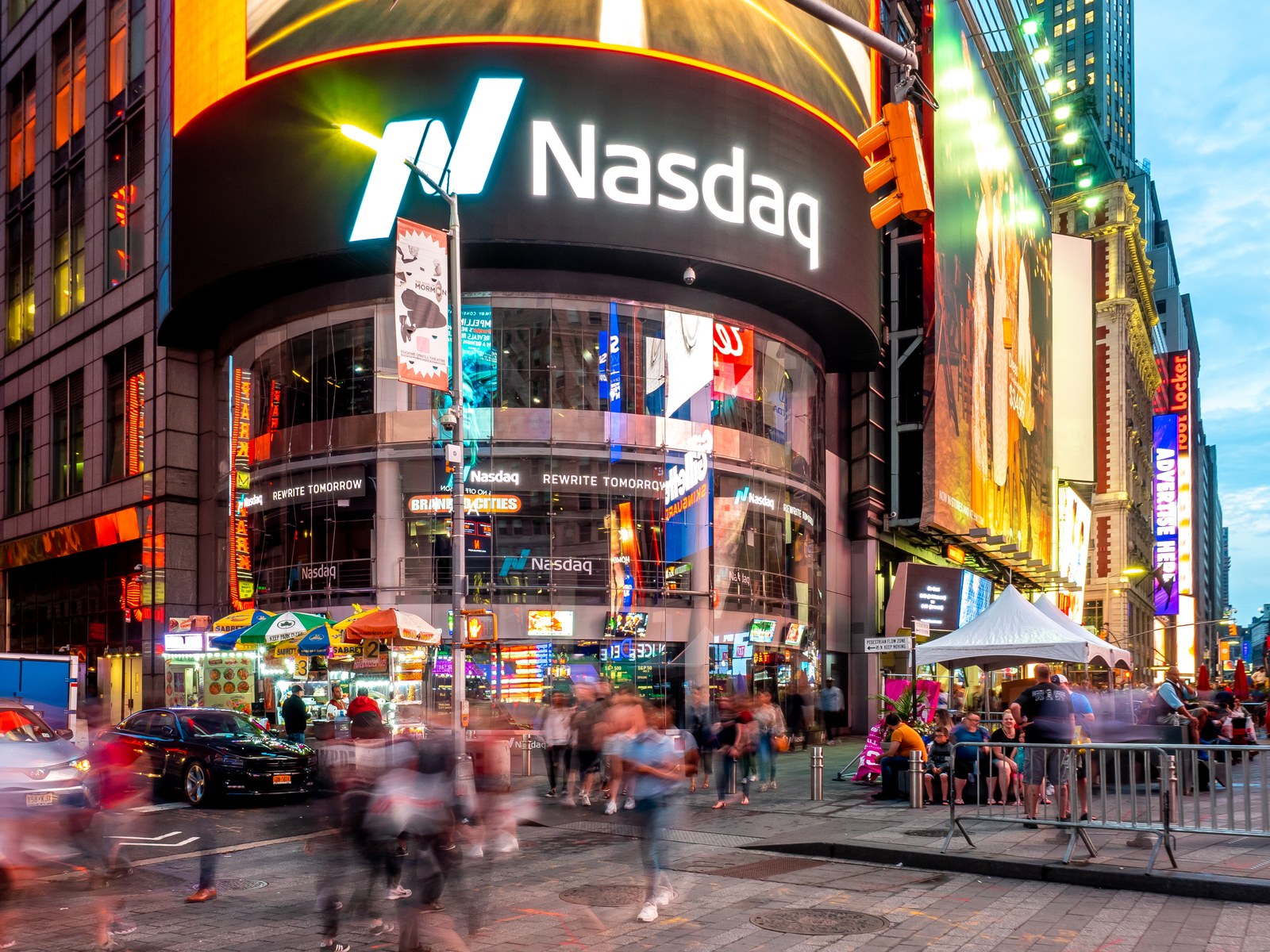
Nasdaq runs the Nasdaq-100 index. Its new rule lets giant new stocks in after 15 trading days.
Photograph: Ajay Suresh, Wikimedia Commons, CC BY 2.0What to watch
The next giants are getting into index funds faster. In March, Nasdaq adopted a "fast entry" rule for the Nasdaq-100, its index of 100 of the largest companies listed on its exchange. A giant new stock can now join after 15 trading days, instead of waiting at least three months. The rule took effect on May 1.
SpaceX, the aerospace and satellite company, was one of the first to use it. It went public on June 12 and joined the Nasdaq-100 on July 7. More than $800 billion tracks that index, so funds following it had to buy. S&P Global, which runs the S&P 500, went the other way. It kept its rule that a company must be profitable to join, and SpaceX, which lost $4.94 billion in 2025, stays out for now.
Anthropic is heading toward a stock market listing of its own, and Fortune expects rules like Nasdaq's to come into play when it does. You cannot change those rules. You can know what your default holds. Rowley's list of what a saver controls is short: "my time horizon, risk tolerance, and asset allocation," and funds "on the lower end of the cost spectrum."
That means how long until you need the money, and how big a drop you can live with. It also means how you divide your savings between stocks and bonds, and how little you pay in fees. Many plans also offer equal-weight index funds, which give every company the same share.
The default still does what it always did. It buys by size. The difference now is that size points at a few giants, and nobody asked you.
Reader comments
Not signed in yet — hit Post and we'll finish it together