
Who's involved
- Jay Jones
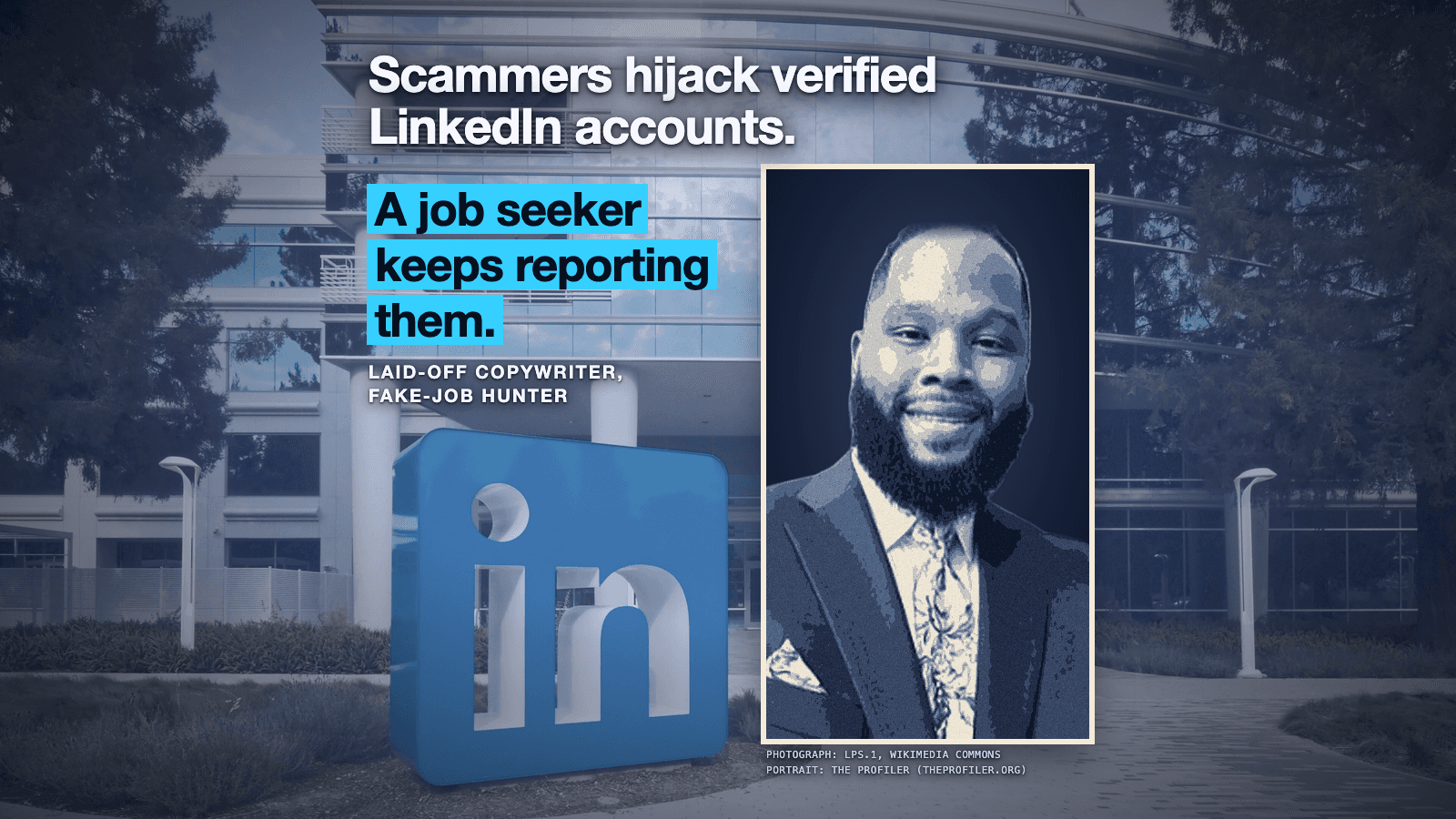
- A laid-off advertising copywriter in the Chicago area who calls himself The Profiler.
- He hunts fake recruiters and fake job ads, then reports them to the job sites and to the companies whose names they use.
- The professional networking site, owned by the software company Microsoft, with more than a billion registered users.
- It hands out the verified badge and runs the process for removing fake profiles. Its vice president of trust product, Oscar Rodriguez, speaks for it in this story.
- The Wall Street Journal
- A national newspaper about business and money.
- It reported Jones's work in September. Its story is behind a paywall, so we read it through the reports that retold it.
- TechSpot
- A technology news site.
- Its September 23 report retells the Journal's story and is our main source for how the scams work.
- Argenta Talent Acquisition
- A recruiting firm in Colorado that helps companies hire.
- Hijacked, verified profiles claimed to work there. Its chief executive hired Jones to cut them loose.
- Texas attorney general's office
- The state of Texas's top law office.
- On July 14 it opened an investigation into whether LinkedIn profits from job listings that are not real openings.
- Capital One
- A credit card and banking company.
- Fake assistant jobs tied to it led to a website it does not run. It says it works with LinkedIn to remove fraudulent job postings.



What changed
Jay Jones lost his job in advertising in late 2023. He is a 39-year-old copywriter in the Chicago area, and he calls himself The Profiler. Since the layoff, he says, he has helped get nearly 60,000 fake job ads taken off the internet, most of them from LinkedIn. His own website puts the count at 58,559. He has also flagged about 7,000 profiles he believes were used in job scams. The Wall Street Journal reported on his work in September, and the technology news site TechSpot retold that report on September 23.
His method takes patience. He often keeps about 50 browser tabs open while he follows a lead. He recently found several LinkedIn recruiter profiles all using the name Linda Anthony. They shared the same photo, had been created around the same time and listed similar jobs. Their web addresses ended in nearly identical strings of letters and numbers, which suggested to him they were made in bulk. After he posted about them, the profiles went dark. "You turn the lights on," he told the Journal, "and the roaches run."
Some fakes do not need a new account at all. Some people verify their identity on LinkedIn, get a verification badge and later stop using the profile. Scammers can take control of those idle accounts, rewrite the work history and list the owner as a recruiter at a real company. TechSpot puts the result plainly: a scammer can get a verified profile and a company affiliation at the same time. The account's real owner earned the badge. The messages come from whoever holds the account now.
Jones found several of these hijacked accounts listed as employees of Argenta Talent Acquisition, a recruiting firm in Colorado. One of them belonged to a dentist in Chile. "It's my brand, it's my reputation," said the firm's chief executive, who hired Jones to cut the fake profiles loose from the company's LinkedIn page. LinkedIn accepted the reports. Then the accounts got 14 days to update their information or appeal before LinkedIn could remove their link to the company.
What's at Stake
Fake job listings taken down, by the count on Jay Jones's own website.
Market intelligence
The read: Over five years, Microsoft is up 78.5%, News Corp is up 20.2% and Capital One is up 20.2%. Over one year, Microsoft is up 0.9%, News Corp is down 6.4% and Capital One is down 10.6%. Over the past month, Microsoft is up, News Corp is down and Capital One is down. Microsoft is up 3.7% today, ahead of the S&P 500's +0.5%. News Corp is up 0.2% today, behind the S&P 500's +0.5%. Capital One is up 1.8% today, ahead of the S&P 500's +0.5%.
Jay Jones, TechSpot, Argenta Talent Acquisition and Texas attorney general's office don't trade on a stock market.
Prices move for many reasons. This shows where they stand, not what caused it.
Prices: Yahoo Finance.
The System Underneath
A scammer takes over an idle verified account, ties it to a company and asks job seekers for money or ID numbers until LinkedIn, after a report and 14 days, can cut that link.
The People

- A verified account nobody usesSome people verify their identity on LinkedIn, get a badge and stop using the profile. Scammers can take control of those accounts.
- attachedA real company's nameThe scammer rewrites the work history and lists the owner as a recruiter at a legitimate business. Jones found several listed at Argenta Talent Acquisition in Colorado.
- sentA message fitted to your résuméJones says scammers use AI to fit the pitch to a person's résumé. Some offer to fix the résumé for a fee. Others ask for a driver's license or Social Security number.
- flaggedA reportJones, or the company whose name was used, reports the profile. In the Argenta case, LinkedIn accepted the reports.
- waitsA 14-day waitThe flagged accounts got 14 days to update their information or appeal before LinkedIn could remove their link to the company. LinkedIn says the wait can help correct inaccurate job details.
The account's real owner earned the badge. After the takeover, the scammer's messages carry it. Even after a report, the account gets 14 days before LinkedIn can remove its company link.
How We Got Here
- Jones is laid off
He loses his advertising job. Searching for work, he runs into fake recruiters and starts studying how the scams work.
- Texas opens an investigation
The Texas attorney general's office starts looking into whether LinkedIn profits from job listings that are not real openings, and demands its records.
- TechSpot retells the story
TechSpot publishes its account of The Wall Street Journal's report on Jones's work. It reports that LinkedIn plans a tool, later in September, that would let verified employers remove fake company links right away.
Why it matters
LinkedIn says its verification features give extra signals about a person's identity or workplace. That is why a hijacked, verified account is worth so much to a scammer. A recruiter with a badge and a real company's name borrows the trust of both. Jones says scammers use AI to fit their pitch to a person's résumé. One might tell you your résumé needs work, then offer to fix it for a fee. Others go after a driver's license or a Social Security number.
The people on the other end are often worn down. In August, 1.9 million Americans had been out of work for at least 27 weeks, about six months, by the government's count. That was 27% of everyone out of work, near its highest share in more than a decade, not counting the pandemic. A long search makes an already stressful process harder, and it leaves people more open to fraud.
LinkedIn says its automated defenses catch most of this before anyone sees it. It told the Journal that its systems proactively block 99.5% of the fake accounts they detect and remove 98.7% of the scam and spam content they identify before members see it. It says it stopped nearly 90 million fake accounts before they went live in the second half of 2025. Read that first number slowly. It counts the fakes LinkedIn's systems caught. Everything Jones finds is something that was still up.
The 14 days are where the two sides disagree. LinkedIn says that waiting period can help correct employment information that is inaccurate. Jones says the same wait gave scammers more time to reach job seekers. "Scammers don't deserve fairness," he said. Oscar Rodriguez, LinkedIn's vice president of trust product, said scammers adapt quickly as platforms add new defenses. He also said verification does not guarantee that a profile or a job posting is legitimate.
A second kind of unreal job has a state's attention. On July 14, the Texas attorney general's office opened an investigation into whether LinkedIn profits from "ghost jobs," listings for roles nobody intends to fill right away. Texans pay about $39.99 or $69.99 a month for LinkedIn's Premium Career and Premium Business plans. The office says LinkedIn does not independently verify the hiring status of most listings. It is an investigation, not a finding.
Who's Accountable
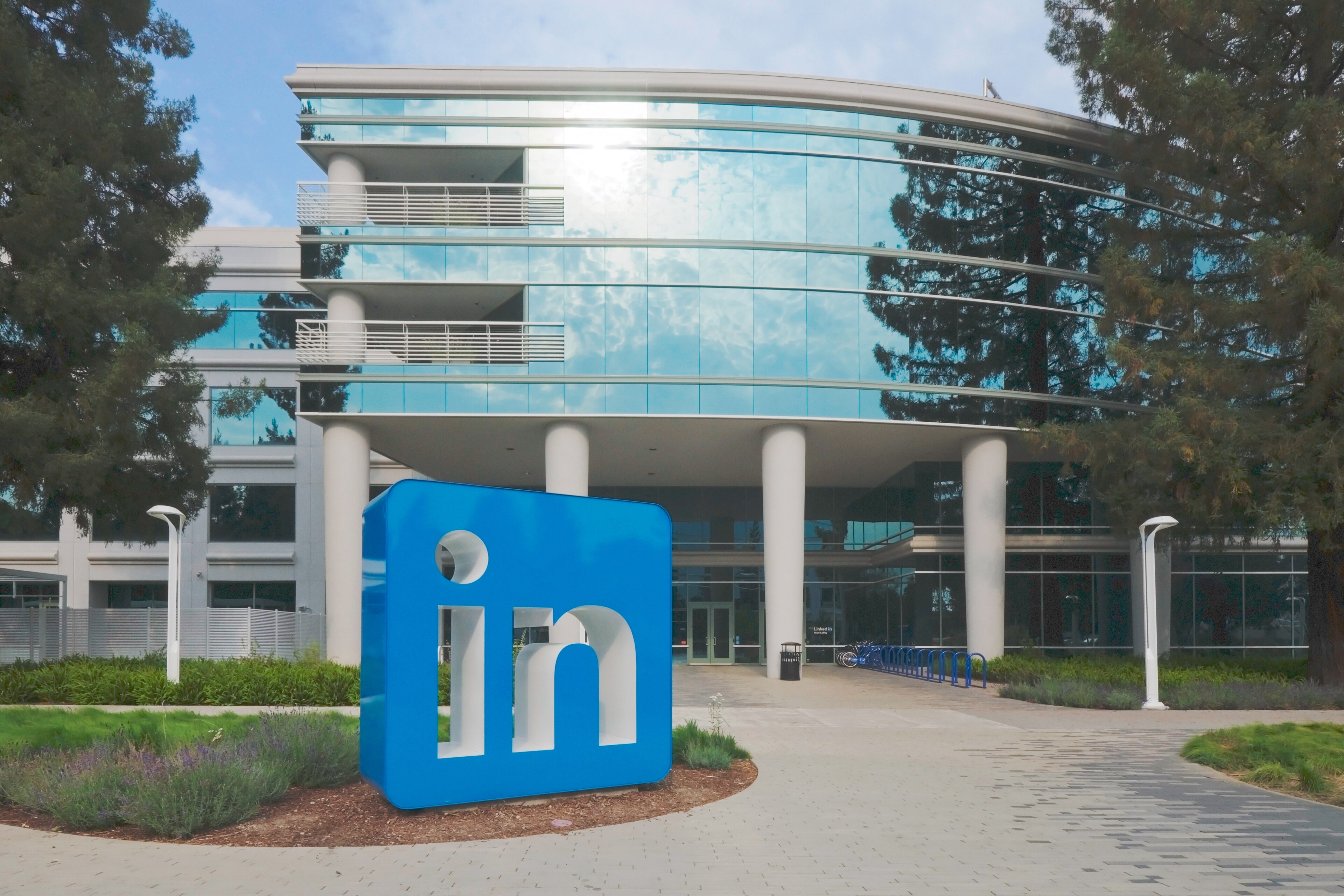
LinkedIn hands out the verified badge. It also runs the 14-day wait before a flagged profile loses its company.
Photograph: LPS.1, Wikimedia Commons, public domainWhat to watch
A fix may be coming. TechSpot reported on September 23 that LinkedIn plans to introduce a tool later in September that would let verified employers remove people's links to their company right away. That goes straight at the 14-day wait. Whether it arrives, and how fast it works for a firm like Argenta, is the thing to watch.
Texas has sent LinkedIn a civil investigative demand, a formal legal demand for documents, data and internal messages about how it markets Premium and checks its job listings. Nothing has been decided, and the office has made no finding.
The check that worked for Jones lives outside LinkedIn. Fake assistant jobs tied to Capital One, the credit card and banking company, appeared on LinkedIn and led to a website the bank does not run. Jones compared them with Capital One's own careers site, where similar openings usually carried different job titles. The bank says it works with LinkedIn to remove fraudulent postings. A badge, a polished profile and a real company's name can all be borrowed. The employer's own careers page is a place the scammer cannot edit.
Reader comments
Not signed in yet — hit Post and we'll finish it together